Fifth Sunday of Easter
Saturday 23rd Feria
10am Mass Tony & Michael Irons, RIP (Anniv)
5.30pm Vigil Mass Diana Underwood, RIP
Sunday 24th April
8am Mass Audrey & Selwyn Lewis, RIP (Anniv)
9.30am Mass The People of the Parish
11.30am Mass Patrick Burke, RIP
5.30pm Vespers & Benediction
Monday 25th St Mark, Evangelist
9am Mass Maureen Reegan, RIP
Tuesday 26th Feria
9am Mass Intentions of Corrigan Family
Wednesday 27th Feria
9am Mass Peter Orwell, RIP
Thursday 28th St Peter Chanel, Pr, M
9am Mass Pauline Kidney, RIP (Anniv)
Friday 29th St Catherine of Siena, V, D
12Noon Mass Patrick Farey, RIP
Saturday 30th St Pius, V, P
10am Mass Intentions of Jim Scott
5.30pm Vigil Mass Rita Condon, RIP
Sunday 1st May
8am Mass Martin Payne, RIP (Anniv)
9.30am Mass The People of the Parish
11.30am Mass May Downey, RIP (Anniv)
4.00pm Mass Peter Griffin, RIP Extraordinary Form
5.30pm Vespers & Benediction
Summary of Amoris Laetitia - The Joy of Love:
It is not by chance that Amoris Laetitia (AL), “The Joy of Love”, the post-synodal Apostolic Exhortation “on Love in the Family”, was signed on 19 March, the Solemnity of Saint Joseph. It brings together the results of the two Synods on the family convoked by Pope Francis in 2014 and 2015. It often cites their Final Reports; documents and teachings of his Predecessors; and his own numerous catecheses on the family. In addition, as in previous magisterial documents, the Pope also makes use of the contributions of various Episcopal Conferences around the world (Kenya, Australia, Argentina…) and cites significant figures such as Martin Luther King and Erich Fromm. The Pope even quotes the film Babette’s Feast to illustrate the concept of gratuity.
Introduction (1-7)
The Apostolic Exhortation is striking for its breadth and detail. Its 325 paragraphs are distributed over nine chapters. The seven introductory paragraphs plainly set out the complexity of a topic in urgent need of thorough study. The interventions of the Synod Fathers make up [form] a “multifaceted gem” (AL 4), a precious polyhedron, whose value must be preserved. But the Pope cautions that “not all discussions of doctrinal, moral or pastoral issues need to be settled by interventions of the magisterium”. Indeed, for some questions, “each country or region … can seek solutions better suited to its culture and sensitive to its traditions and local needs. For ‘cultures are in fact quite diverse and every general principle … needs to be inculturated, if it is to be respected and applied’” (AL 3). This principle of inculturation applies to how problems are formulated and addressed and, apart from the dogmatic issues that have been well defined by the Church’s magisterium, none of this approach can be “globalized”. In his address at the end of the 2015 Synod, the Pope said very clearly: “What seems normal for a bishop on one continent, is considered strange and almost scandalous – almost! – for a bishop from another; what is considered a violation of a right in one society is an evident and inviolable rule in another; what for some is freedom of conscience is for others simply confusion.”
The Pope clearly states that we need above all to avoid a sterile juxtaposition between demands for change and the general application of abstract norms. He writes: “The debates carried on in the media, in certain publications and even among the Church’s ministers, range from an immoderate desire for total change without sufficient reflection or grounding, to an attitude that would solve everything by applying general rules or deriving undue conclusions from particular theological considerations” (AL 2).
Cont’d next week …
Dates for your Diary
Saturday 14th May
Ordination of Deacon Michael Halsall at St John Fisher
Saturdays 7th & 14th May
First Holy Communion Masses
Wednesday 18th May
Bishop’s Visitation & Confirmation Mass at 7.30pm
Sunday 20th May
Corpus Christi Procession at 4pm
Sun 14th to Sat 20th August
Parish/Diocesan Pilgrimage to Lourdes
Baptisms
We congratulate the parents of Cillian Scott, Gabriela Zolkiewska, Eva Turner, Otis Smith, Kittie-Florence Appleton, Nell Lee, Carlota Boxell-Roa, Holden Grant, Viviana Shaw, Harry Shaw, William Baker and Ida Gooch who were Baptised recently at Our Lady of Lourdes. May God bless them and their families as they grow in His knowledge and love.
Counters and Folders
Counters: Shirley Murphy & John Murphy.
Newsletter Folders: Bobby Newman & Emma Beardsell.
Catholic Women’s League
There will be a CWL Social Meeting on Monday, 25 April at 2pm in the Newman Room. Please feel welcome to join us.
Parish Fundraising
Thank you to everyone who supports the 200 Club. The results of the March draw are as follows:
1st Prize £150 91 Mrs M Foyster 4th Prize £50 18 Rev J McCollough
2nd Prize £100 99 Mrs E Gurney 5th Prize £25 137 Mr & Mrs A Cousins
3rd Prize £75 44 Mr P Fisher
From April 1st 2015 to March 31st 2016 a total of £6,195 was transferred from the 200 Club account to the Parish Centre account. Thank you to all parishioners who have supported this 200 Club during this time. Subscription is £5.00 per month, either by cash, cheque or direct debit. If you would like to join, please fill in a form which can be found at the back of the church or ring Linda Wall on 01702 558217.
Serving the Homeless
The committee of Serving the Homeless wish to thank the parishioners who
supported their recent quiz night, which raised £610. This week we have been able to give HARP the funds to purchase an industrial washing machine/dryer for the Bradbury Centre plus five hoovers, one for each of their properties.
Our next fundraising event is a buffet meal at the East Restaurant in Alexandra Street, Southend on Wednesday 25th May at 7.30 pm. Tickets cost £15 and are available from Linda Wall 558217 or Jo Ronan 474062.
Scripture Group
Fr Con Joyce’s Scripture Group will next meet in the Parish Centre 8pm-9pm on Thursday, 5th May. These meetings are held to give us a better understanding of the Bible, to encourage us to read it and so help us to come closer to Jesus in our daily lives as Christians. All welcome.
St Francis Catholic Primary School, London Road, Maldon, Essex, CM9 6HN
Head of School L10 - L12. Required for September 2016 or earlier. Please contact the school office for an appointment on 01621 856698. Closing date for receipt of applications: Monday 9th May 2016 at noon.
St Francis Catholic Primary School, London Road, Maldon, Essex, CM9 6HN
Head of School L10 - L12. Required for September 2016 or earlier. Please contact the school office for an appointment on 01621 856698. Closing date for receipt of applications: Monday 9th May 2016 at noon.
Pray for the Dead
Please pray for our dead on their anniversaries:
Fr Simon Sullivan, Fr Myles O’Reilly, Fr Brian O’Higgins, Mary Bartley,
Tony Pyraft, John Heaphy, Minnie Smith, ElizabethWhite, Vincent Hurley,
Audrey Lewis, Phyllis Tate,Mary Butt, Eric Pearson, Vera de Souza, Elsie Robinson, Mary Fitzgerald, Arthur Bartley, Margaret Makey, Christopher Dowdall,
Tom Skellon, Patricia Burles, Pauline Kidney, Margaret Ashley, RoseFaulkner, Jeremiah Lucey Francis (Frank) Mansfield, Winifred Sentinella, Edith Pey
and Margaret Randall..
Eternal rest grant unto them, O Lord, and let perpetual light shine upon them. May the souls of the faithful departed, through the mercy of God, rest in peace.
Fourth Sunday of Easter
Dear friends in Christ
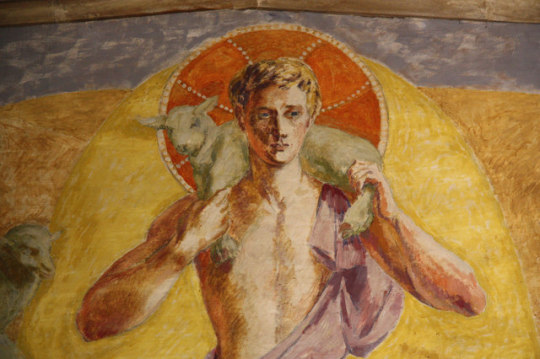
The Church proclaims Christ as the Good Shepherd on this Sunday of Eastertide. It is one of the most ancient images we have of Jesus and one intimately associated with the Resurrection: the Risen Lord leads home to Heaven His chosen ones. This image is sung of in the twenty-third Psalm at this Sunday’s Mass: The Lord is my Shepherd….He leads me to green pastures…He has prepared a banquet for me. This celestial imagery reminds us also that God has not left us without guidance on earth. The Church, which governs in His name until the end of time, appoints shepherds to minster and guide us on earth. The Bishop and Priests of the Catholic Church are descended in a direct and unbroken line from Christ and the Apostles and therefore teach and minster in His Name. The Church asks us to pray for vocations to the Priesthood and Religious Life on this Sunday, so that the flock of Christ on earth may never be without the necessary spiritual help on our way to eternal life.
The Pope, as the Chief Shepherd of the Church has a special place in the plan of salvation; not because of the person he is but because of the special gift he has been given to be the centre and focus of unity in Faith and Christian living. Last week Pope Francis published his long-awaited Apostolic Exhortation on Marriage and Family Life entitled Amoris Laetitia - The Joy of Love. It is the fruit of two special Synods which were held recently to discuss contemporary matters relating to Marriage. This document is particularly long but well-worth reading! I have included within this Newsletter an excellent summary/reflection by Bishop Robert Barron of Los Angeles which is helpful in understanding what the Pope is saying. Over the coming weeks I will further include Chapter summaries of this document for our consideration.
Please pray for the Shepherds of the Church that God has given us: the Holy Father, our Bishop and our priests who bring us the grace of God in the Sacraments. Thank you too, for the prayerful support you continue to offer. May the Church continue to be an ever-brighter beacon of hope and Truth in these times to all people of good will who are searching and striving to do God’s Will.
Msgr Kevin Hale
Fourth Sunday of Easter

Dear friends in Christ
The Church proclaims Christ as the Good Shepherd on this Sunday of Eastertide. It is one of the most ancient images we have of Jesus and one intimately associated with the Resurrection: the Risen Lord leads home to Heaven His chosen ones. This image is sung of in the twenty-third Psalm at this Sunday’s Mass: The Lord is my Shepherd….He leads me to green pastures…He has prepared a banquet for me. This celestial imagery reminds us also that God has not left us without guidance on earth. The Church, which governs in His name until the end of time, appoints shepherds to minster and guide us on earth. The Bishop and Priests of the Catholic Church are descended in a direct and unbroken line from Christ and the Apostles and therefore teach and minster in His Name. The Church asks us to pray for vocations to the Priesthood and Religious Life on this Sunday, so that the flock of Christ on earth may never be without the necessary spiritual help on our way to eternal life.
The Pope, as the Chief Shepherd of the Church has a special place in the plan of salvation; not because of the person he is but because of the special gift he has been given to be the centre and focus of unity in Faith and Christian living. Last week Pope Francis published his long-awaited Apostolic Exhortation on Marriage and Family Life entitled Amoris Laetitia - The Joy of Love. It is the fruit of two special Synods which were held recently to discuss contemporary matters relating to Marriage. This document is particularly long but well-worth reading! I have included within this Newsletter an excellent summary/reflection by Bishop Robert Barron of Los Angeles which is helpful in understanding what the Pope is saying. Over the coming weeks I will further include Chapter summaries of this document for our consideration.
Please pray for the Shepherds of the Church that God has given us: the Holy Father, our Bishop and our priests who bring us the grace of God in the Sacraments. Thank you too, for the prayerful support you continue to offer. May the Church continue to be an ever-brighter beacon of hope and Truth in these times to all people of good will who are searching and striving to do God’s Will.
Msgr Kevin Hale
Fourth Sunday of Easter
Saturday 16th Feria
10am Mass Malcolm & Djanet Cheshire - 61st Wedding Anniversary
5.30pm Vigil Mass The People of the Parish
Sunday 17th April
8am Mass Peggy Steven & Martin Cockerel, RIP
9.30am Mass Ann Floyd, RIP
11.30am Mass Alex Clarke, RIP
5.30pm Vespers & Benediction
Monday 18th Feria
9am Mass Colin Cheeseman (Special Intentions)
Tuesday 19th Feria
9am Mass Intentions of Rosemary Arscott
Wednesday 20th Feria
9am Mass Tony Trigg, RIP
2.30pm Requiem Mass: Clare Ann Houlihan, RIP
Thursday 21st Feria
9am Mass Intentions of Juan Ayerbe
Friday 22nd Feria
12Noon Mass John & Edith Young, RIP
Saturday 23rd Feria
10am Mass Tony & Michael Irons, RIP (Anniv)
5.30pm Vigil Mass Diana Underwood, RIP
Sunday 24th April
8am Mass Audrey & Selwyn Lewis, RIP (Anniv)
9.30am Mass The People of the Parish
11.30am Mass Patrick Burke, RIP
5.30pm Vespers & Benediction
Thoughts on Pope Francis’ Letter: Amoris Laetitia – The Joy of Love
On a spring day about five years ago, when I was rector of Mundelein Seminary, Francis Cardinal George spoke to the assembled student body. He congratulated those proudly orthodox seminarians for their devotion to the dogmatic and moral truths proposed by the Church, but he also offered some pointed pastoral advice. He said that it is insufficient simply to drop the truth on people and then smugly walk away. Rather, he insisted, you must accompany those you have instructed, committing yourself to helping them integrate the truth that you have shared. I thought of this intervention by the late Cardinal often as I was reading Pope Francis’s apostolic exhortation Amoris Laetitia. If I might make bold to summarise a complex 264-page document, I would say that Pope Francis wants the truths regarding marriage, sexuality, and family to be unambiguously declared, but that he also wants the Church’s ministers to reach out in mercy and compassion to those who struggle to incarnate those truths in their lives.
In regard to the moral objectivities of marriage, the Pope is bracingly clear. He unhesitatingly puts forward the Church’s understanding that authentic marriage is between a man and a woman, who have committed themselves to one another in permanent fidelity, expressing their mutual love and openness to children, and abiding as a sacrament of Christ’s love for his Church (52, 71). He bemoans any number of threats to this ideal, including moral relativism, a pervasive cultural narcissism, the ideology of self-invention, pornography, the “throwaway” society, etc. He explicitly calls to our attention the teaching of Pope Paul VI in Humanae Vitae regarding the essential connection between the unitive and the procreative dimensions of conjugal love (80). Moreover, he approvingly cites the consensus of the recent Synod on the Family that homosexual relationships cannot be considered even vaguely analogous to what the Church means by marriage (251). He is especially strong in his condemnation of ideologies that dictate that gender is merely a social construct and can be changed or manipulated according to our choice (56). Such moves are tantamount, he argues, to forgetting the right relationship between creature and Creator. Finally, any doubt regarding the Pope’s attitude toward the permanence of marriage is dispelled as clearly and directly as possible: “The indissolubility of marriage—‘what God has joined together, let no man put asunder’ (Mt 19:6) —should not be viewed as a ‘yoke’ imposed on humanity, but as a ‘gift’ granted to those who are joined in marriage…” (62).
In a particularly affecting section of the exhortation, Pope Francis interprets the famous hymn to love in Paul’s first letter to the Corinthians (90-119). Following the great missionary Apostle, he argues that love is not primarily a feeling (94), but rather a commitment of the will to do some pretty definite and challenging things: to be patient, to bear with one another, to put away envy and rivalry, ceaselessly to hope. In the tones of grandfatherly pastor, Francis instructs couples entering into marriage that love, in this dense and demanding sense of the term, must be at the heart of their relationship. I frankly think that this portion of Amoris Laetitia should be required reading for those in pre-Cana other similar marriage preparation programs in the Catholic Church. Now Francis says much more regarding the beauty and integrity of marriage, but you get my point: there is no watering down or compromising of the ideal in this text.
However, the Pope also honestly admits that many, many people fall short of the ideal, failing fully to integrate all of the dimensions of what the Church means by matrimony. What is the proper attitude to them? Like Cardinal George, the Pope has a visceral reaction against a strategy of simple condemnation, for the Church, he says, is a field hospital, designed to care precisely for the wounded (292). Accordingly, he recommends two fundamental moves. First, we can recognise, even in irregular or objectively imperfect unions, certain positive elements that participate, as it were, in the fullness of married love. Thus for example, a couple living together without benefit of marriage might be marked by mutual fidelity, deep love, the presence of children, etc. Appealing to these positive marks, the Church might, according to a “law of gradualness,” move that couple toward authentic and
fully-integrated matrimony (295). This is not to say that living together is permitted or in accord with the will of God; it is to say that the Church can perhaps find a more winsome way to move people in such a situation to conversion.
The second move—and here we come to what will undoubtedly be the most controverted part of the exhortation—is to employ the Church’s classical distinction between the objective quality of a moral act and the subjective responsibility that the moral agent bears for committing that act (302). The Pope observes that many people in civil marriages following upon a divorce find themselves in a nearly impossible bind. If their second marriage has proven faithful, life-giving, and fruitful, how can they simply walk out on it without in fact incurring more sin and producing more sadness? This is, of course, not to insinuate that their second marriage is not objectively disordered, but it is to say that the pressures, difficulties, and dilemmas might mitigate their culpability. Here is how Pope Francis applies the distinction: “Hence it can no longer simply be said that all those in any ‘irregular’ situation are living in a state of mortal sin and are deprived of sanctifying grace” (301). Could the Church’s minister, therefore, not help such people, in the privacy of the rectory parlour or the confessional, to discern their degree of moral responsibility? Once again, this is not to embrace a breezy “anything-goes” mentality, nor to deny that a civil marriage after a divorce is objectively irregular; it is to find, perhaps, for someone in great pain, a way forward.
Will Amoris Laetitia end all debate on these matters? Hardly. But it does indeed represent a deft and impressive balancing of the many and often contradictory interventions at the two Synods on the Family. As such, it will be of great service to many suffering souls who come to the Field Hospital.
Bishop Robert Barron
Thoughts on Pope Francis’ Letter: Amoris Laetitia – The Joy of Love
On a spring day about five years ago, when I was rector of Mundelein Seminary, Francis Cardinal George spoke to the assembled student body. He congratulated those proudly orthodox seminarians for their devotion to the dogmatic and moral truths proposed by the Church, but he also offered some pointed pastoral advice. He said that it is insufficient simply to drop the truth on people and then smugly walk away. Rather, he insisted, you must accompany those you have instructed, committing yourself to helping them integrate the truth that you have shared. I thought of this intervention by the late Cardinal often as I was reading Pope Francis’s apostolic exhortation Amoris Laetitia. If I might make bold to summarise a complex 264-page document, I would say that Pope Francis wants the truths regarding marriage, sexuality, and family to be unambiguously declared, but that he also wants the Church’s ministers to reach out in mercy and compassion to those who struggle to incarnate those truths in their lives.
In regard to the moral objectivities of marriage, the Pope is bracingly clear. He unhesitatingly puts forward the Church’s understanding that authentic marriage is between a man and a woman, who have committed themselves to one another in permanent fidelity, expressing their mutual love and openness to children, and abiding as a sacrament of Christ’s love for his Church (52, 71). He bemoans any number of threats to this ideal, including moral relativism, a pervasive cultural narcissism, the ideology of self-invention, pornography, the “throwaway” society, etc. He explicitly calls to our attention the teaching of Pope Paul VI in Humanae Vitae regarding the essential connection between the unitive and the procreative dimensions of conjugal love (80). Moreover, he approvingly cites the consensus of the recent Synod on the Family that homosexual relationships cannot be considered even vaguely analogous to what the Church means by marriage (251). He is especially strong in his condemnation of ideologies that dictate that gender is merely a social construct and can be changed or manipulated according to our choice (56). Such moves are tantamount, he argues, to forgetting the right relationship between creature and Creator. Finally, any doubt regarding the Pope’s attitude toward the permanence of marriage is dispelled as clearly and directly as possible: “The indissolubility of marriage—‘what God has joined together, let no man put asunder’ (Mt 19:6) —should not be viewed as a ‘yoke’ imposed on humanity, but as a ‘gift’ granted to those who are joined in marriage…” (62).
In a particularly affecting section of the exhortation, Pope Francis interprets the famous hymn to love in Paul’s first letter to the Corinthians (90-119). Following the great missionary Apostle, he argues that love is not primarily a feeling (94), but rather a commitment of the will to do some pretty definite and challenging things: to be patient, to bear with one another, to put away envy and rivalry, ceaselessly to hope. In the tones of grandfatherly pastor, Francis instructs couples entering into marriage that love, in this dense and demanding sense of the term, must be at the heart of their relationship. I frankly think that this portion of Amoris Laetitia should be required reading for those in pre-Cana other similar marriage preparation programs in the Catholic Church. Now Francis says much more regarding the beauty and integrity of marriage, but you get my point: there is no watering down or compromising of the ideal in this text.
However, the Pope also honestly admits that many, many people fall short of the ideal, failing fully to integrate all of the dimensions of what the Church means by matrimony. What is the proper attitude to them? Like Cardinal George, the Pope has a visceral reaction against a strategy of simple condemnation, for the Church, he says, is a field hospital, designed to care precisely for the wounded (292). Accordingly, he recommends two fundamental moves. First, we can recognise, even in irregular or objectively imperfect unions, certain positive elements that participate, as it were, in the fullness of married love. Thus for example, a couple living together without benefit of marriage might be marked by mutual fidelity, deep love, the presence of children, etc. Appealing to these positive marks, the Church might, according to a “law of gradualness,” move that couple toward authentic and
fully-integrated matrimony (295). This is not to say that living together is permitted or in accord with the will of God; it is to say that the Church can perhaps find a more winsome way to move people in such a situation to conversion.
The second move—and here we come to what will undoubtedly be the most controverted part of the exhortation—is to employ the Church’s classical distinction between the objective quality of a moral act and the subjective responsibility that the moral agent bears for committing that act (302). The Pope observes that many people in civil marriages following upon a divorce find themselves in a nearly impossible bind. If their second marriage has proven faithful, life-giving, and fruitful, how can they simply walk out on it without in fact incurring more sin and producing more sadness? This is, of course, not to insinuate that their second marriage is not objectively disordered, but it is to say that the pressures, difficulties, and dilemmas might mitigate their culpability. Here is how Pope Francis applies the distinction: “Hence it can no longer simply be said that all those in any ‘irregular’ situation are living in a state of mortal sin and are deprived of sanctifying grace” (301). Could the Church’s minister, therefore, not help such people, in the privacy of the rectory parlour or the confessional, to discern their degree of moral responsibility? Once again, this is not to embrace a breezy “anything-goes” mentality, nor to deny that a civil marriage after a divorce is objectively irregular; it is to find, perhaps, for someone in great pain, a way forward.
Will Amoris Laetitia end all debate on these matters? Hardly. But it does indeed represent a deft and impressive balancing of the many and often contradictory interventions at the two Synods on the Family. As such, it will be of great service to many suffering souls who come to the Field Hospital.
Bishop Robert Barron
Church Cleaning
If you are able to help with cleaning the Church for one hour every four weeks please contact the Parish office. Thank you.